Machine learning grows fast. Unsupervised learning helps models find hidden patterns. Models use raw, unlabeled data. They do not need labels. This guide shows core ideas, methods, and uses of unsupervised learning. It explains how unsupervised learning finds value in raw data.
What is Unsupervised Learning?
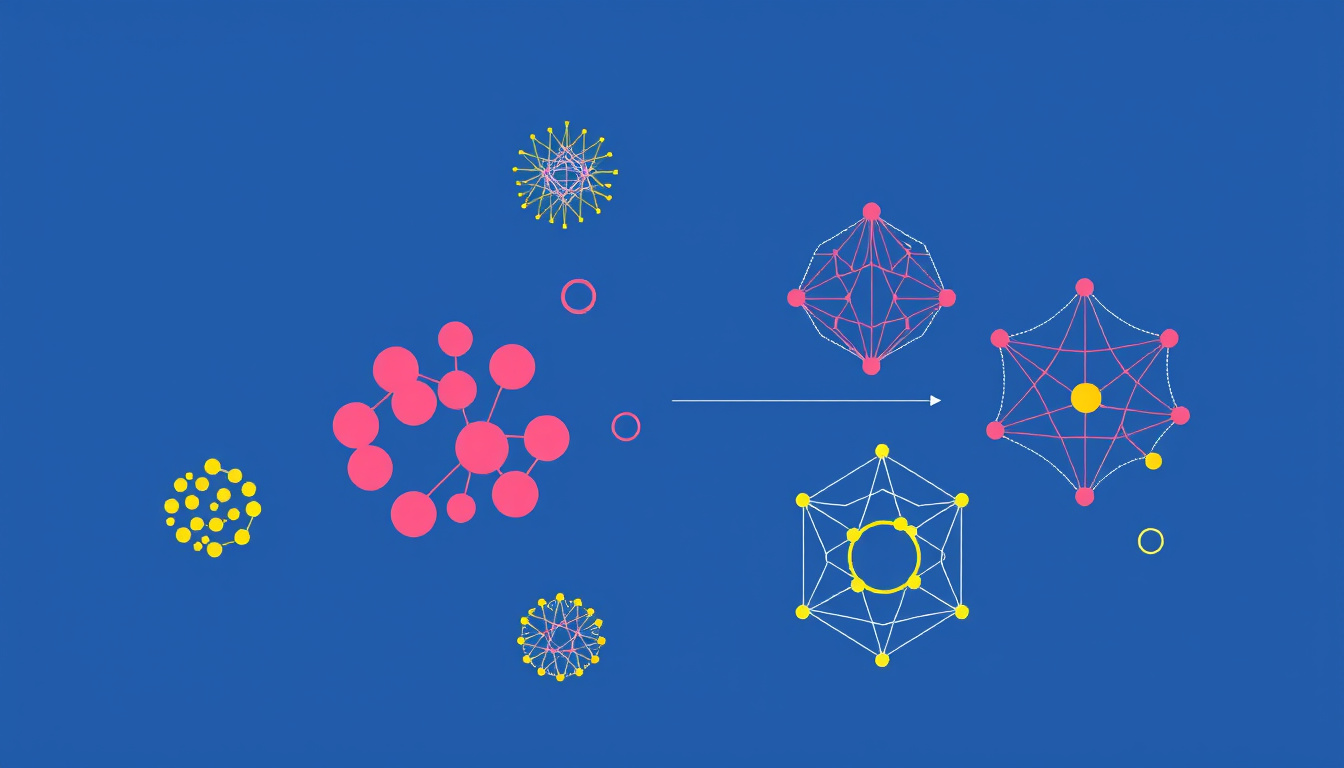
Unsupervised learning focuses on raw data. The data comes without labels. The algorithm seeks patterns and structure. It groups similar points, finds hidden traits, and spots links. No extra help or hints come in. This method works well when labeling is hard or costs too much.
Unlike supervised learning, which uses clear input and output pairs, unsupervised learning uses only the input data. It learns how words, images, or numbers naturally group or relate. Many tasks, like text handling, image checks, market studies, fraud spotting, and recommendations, use this method.
Key Tasks in Unsupervised Learning
We see three main tasks in unsupervised learning. They are clustering, association rule learning, and dimensionality reduction.
1. Clustering
Clustering puts similar data points in the same group. The aim is to show natural groups without set labels.
-
K-Means Clustering
The algorithm splits data into K clusters. It finds the closest center and reshapes the groups. This method helps in customer grouping, image divide, and document sort. -
Hierarchical Clustering
This method builds clusters step by step. In bottom-up, points join to form larger groups. In top-down, a large group splits into small ones. It uses dendrograms for clarity. -
Density-Based Clustering (DBSCAN)
This algorithm finds groups of any shape. It spots dense areas and sets them apart from sparse ones. It works well in noisy data. -
Mean-Shift and Spectral Clustering
Mean-Shift looks for peaks in data. Spectral Clustering uses graphs of points to find clusters. -
Probabilistic Clustering (Gaussian Mixture Models – GMMs)
This method models data as a mix of several Gaussian shapes. It gives a chance for each point to belong to more than one group.
2. Association Rule Learning
This task finds frequent links between items in large records. The rules use an “if-then” style.
-
Apriori Algorithm
It repeats steps to find frequent item groups. It helps in market basket studies. -
FP-Growth Algorithm
This method uses compact data trees. It finds frequent patterns fast. -
Eclat Algorithm
The algorithm finds common item sets through intersections.
Association rules help in planning cross-selling and boosting recommendations.
3. Dimensionality Reduction
Dimensionality reduction lowers the number of features. It keeps core information while cutting extra parts. The process aids in clear views, cuts noise, and speeds up work.
-
Principal Component Analysis (PCA)
PCA shifts data into components that do not mix. It keeps maximum spread in data. -
Non-negative Matrix Factorization (NMF)
NMF splits data into parts without negatives. It works well for parts-based views. -
Locally Linear Embedding (LLE) and Isomap
LLE keeps close neighbors together. Isomap keeps overall structure in view.
This task improves model work and helps in data exploration.
How Does Unsupervised Learning Work?
The unsupervised learning flow works in steps.
-
Data Collection
Raw, unlabeled data come from many sources. -
Algorithm Selection
One picks a method that fits the goal: grouping, linking, or shrinking. -
Model Training
The model sees all the data. It finds hidden links or groupings. -
Data Organization or Transformation
The model groups data, finds links, or shrinks data points into fewer parts. -
Interpretation and Utilization
One reads the results to gain insight or feed new models.
Unsupervised Learning Neural Architectures
Deep learning uses special neural networks for unsupervised work.
-
Autoencoders
These networks learn to copy input data. They make compressed, useful features for spotting oddities or for making new data. -
Restricted Boltzmann Machines (RBMs) and Boltzmann Machines
These models use probability. They take ideas from physics to learn hidden data parts. -
Self-Organizing Maps (SOMs)
These networks create low-dimension maps. They keep nearby features together.
Methods like contrastive divergence, the wake-sleep algorithm, or backpropagation help train these networks.
Applications Across Industries
Unsupervised learning finds use in many fields.
-
Customer Segmentation
Clustering helps split customers by traits or habits. It boosts targeted marketing. -
Anomaly Detection
The method spots odd data that may signal fraud, attacks, or faults. -
Recommendation Systems
It learns what users like to suggest products or media. -
Image and Text Analysis
The method groups similar visuals or writings for sort or check. -
Social Network Analysis
It reveals communities or trends on networks.
Advantages and Challenges
Advantages
• Unsupervised learning does not need costly labeled data.
• It shows hidden groups.
• It works well with high-dimensional data.
• It helps explore and find new insights.
Challenges
• Noisy data can hide true links.
• No labels make it hard to guide the model.
• Results might seem unclear or vague.
• The model may overfit or spot noise instead of real links.
Summary
Unsupervised learning is a key tool in machine learning. It lets systems learn from raw data. The method works with clustering, linking, and reducing features. It also uses deep learning models like autoencoders and RBMs. With these tools, one finds hidden information and makes better choices.
Data grows fast and becomes complex. Learning these methods is key for real-world challenges.
References
- Unsupervised Learning, Wikipedia
- What is Unsupervised Learning, GeeksforGeeks
- What Is Unsupervised Learning? IBM Knowledge Center
Try this workflow today, Writer Link AI and Write Easy provide smart outputs with a natural voice. Get started with a free plan at