Data matters. In machine learning, data quality is key. Supervised models need labels. These labels cost time and money. Unsupervised models use raw data but may miss details. Semi-supervised learning (SSL) blends both kinds. It ties labeled text close to unlabeled text. This link makes learning easier when labels are few and unlabeled data is many.
What is Semi-Supervised Learning?
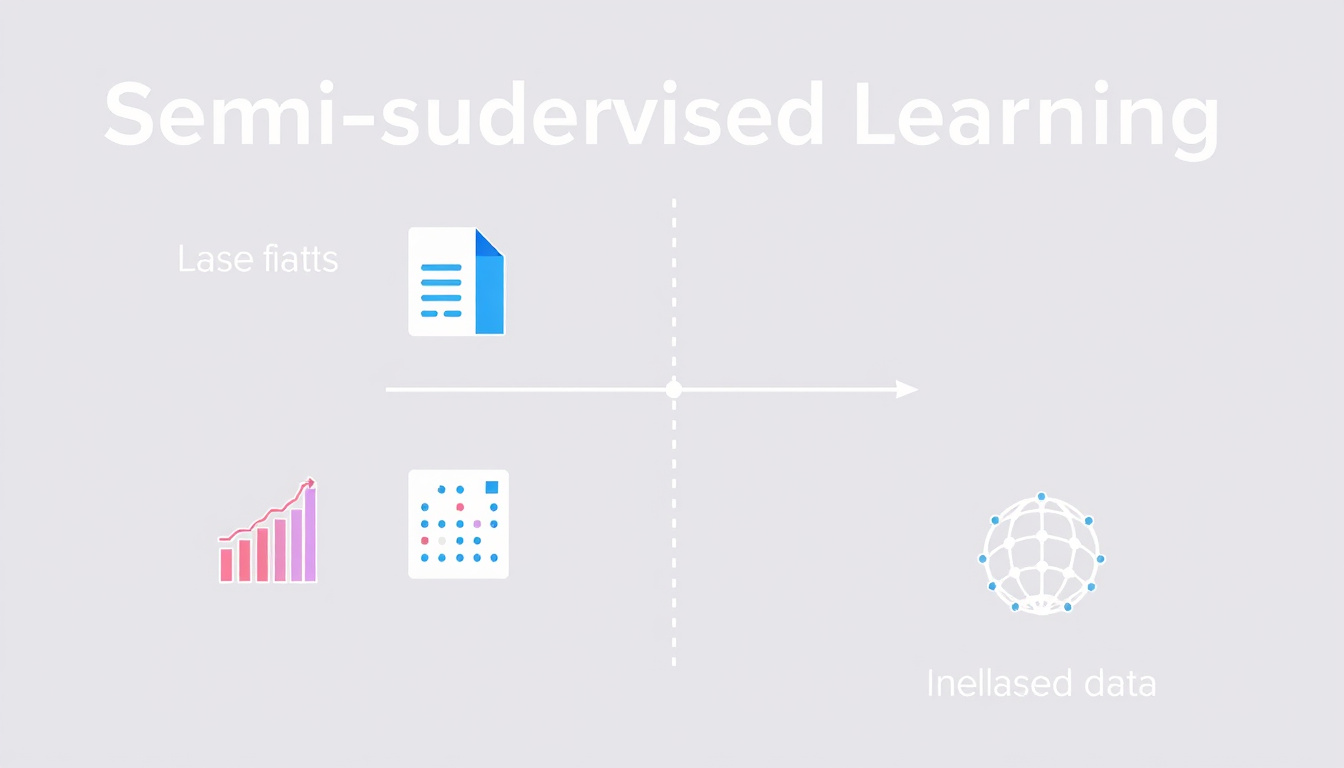
Semi-supervised learning sits between supervised and unsupervised methods. It uses a few clear labels and many raw data points. Models learn to classify or predict with more care.
In a supervised model, each item gets a label. Unsupervised methods search for patterns without help. SSL builds a link. It uses nearby words to boost learning. This idea works well in medicine, language tasks, and biology. Experts need few labels, but raw data is rich.
Why Use Semi-Supervised Learning?
Labels come at a high cost. They take time and expert work. For tasks like object spotting in pictures or detecting speech sound, labels are hard to get. For example:
- Medical imaging needs experts to mark scans.
- Speech tasks call for long, careful transcriptions.
- Language work asks for deep linguistic checks.
SSL uses raw points to ease the load. It cuts cost, saves time, and speeds learning by drawing words and ideas close together.
The Working Principle of Semi-Supervised Learning
SSL mixes cues from labels and the shape of raw data. First, SSL learns sharp edges between classes. Labeled words serve as anchors. Then, the model finds patterns while keeping words close. The hidden rule: words that stick near each other share meaning.
Key Assumptions in Semi-Supervised Learning
- Smoothness: Words near each other share the same tag.
- Clustering: Words group together in clusters.
- Manifold: Many words lie on a simple path in high space.
With these links, SSL spreads labels from known words to near ones.
Popular Semi-Supervised Learning Techniques
SSL has many ways to work. Each one links words with close connections.
1. Self-Training
A basic model learns from clear data first. It then fills in gaps by guessing labels for raw words. The best guesses join the clear parts. This step tightens the word links.
2. Co-Training
Two models work on different word sets. Each model helps the other add clarity. They share labels and boost results.
3. Multi-View Training
This method uses different views—like text and image. These views check with each other. The close links help models agree.
4. Graph-Based Methods
Data points become nodes on a graph. Edges link similar words. Known labels travel through the graph to unknown words. This simple link spreads clues.
Semi-Supervised Learning in Practice: An Example
Think of the Iris dataset from botany. Only a few flowers are tagged. A graph-based SSL, like Label Propagation, works by:
- Building a graph of similar points.
- Anchoring a few words to guide many.
- Matching the accuracy of full-label models.
Before and after, labels spread closely among words.
Advantages of Semi-Supervised Learning
- Cost Efficient: Less need for many labels.
- Improved Generalization: Models learn more by linking many words.
- Flexibility: Works with images, text, and sounds.
- Better on Rare Classes: Finds patterns even when few examples exist.
Limitations and Challenges
- Model Complexity: SSL models need careful tuning.
- Noisy Data: Raw words can mislead if not checked.
- Assumption Dependence: Rules may sometimes fail.
- Evaluation Challenges: Fewer labels make testing tougher.
Applications of Semi-Supervised Learning
SSL helps in many fields, such as:
- Face Recognition: A few tagged faces and many raw ones build strong links.
- Handwritten Text: Models adjust to varied writing by linking word patterns.
- Speech Recognition: Raw speech links boost text quality.
- Cybersecurity: Sparse alerts mix with many signals to spot threats.
- Finance: Fraud tests use few labels with a wealth of data.
Conclusion
Semi-supervised learning joins labeled facts and unlabeled clues. It links words and ideas closely. This mix builds models that learn well and fast. As data grows, SSL will lead smarter, cost-effective AI.
References:
- IBM: Overview of Semi-Supervised Learning Concepts
- Wikipedia: Weak Supervision and Semi-Supervised Learning
- GeeksforGeeks: Semi-Supervised Learning Techniques and Examples
Try this workflow today, Writer Link AI and Write Easy provide smart outputs with a natural voice. Get started with a free plan at