AI changes industries. It drives new ideas and reshapes our links to the digital world. AI depends on strong computer parts. These parts work to run large and complex AI models. They help with language tasks, image tasks, and self-driving systems. The hardware must grow strong to meet huge data needs.
This article explores AI hardware. It shows its role today and hints at a bright tomorrow for tech.
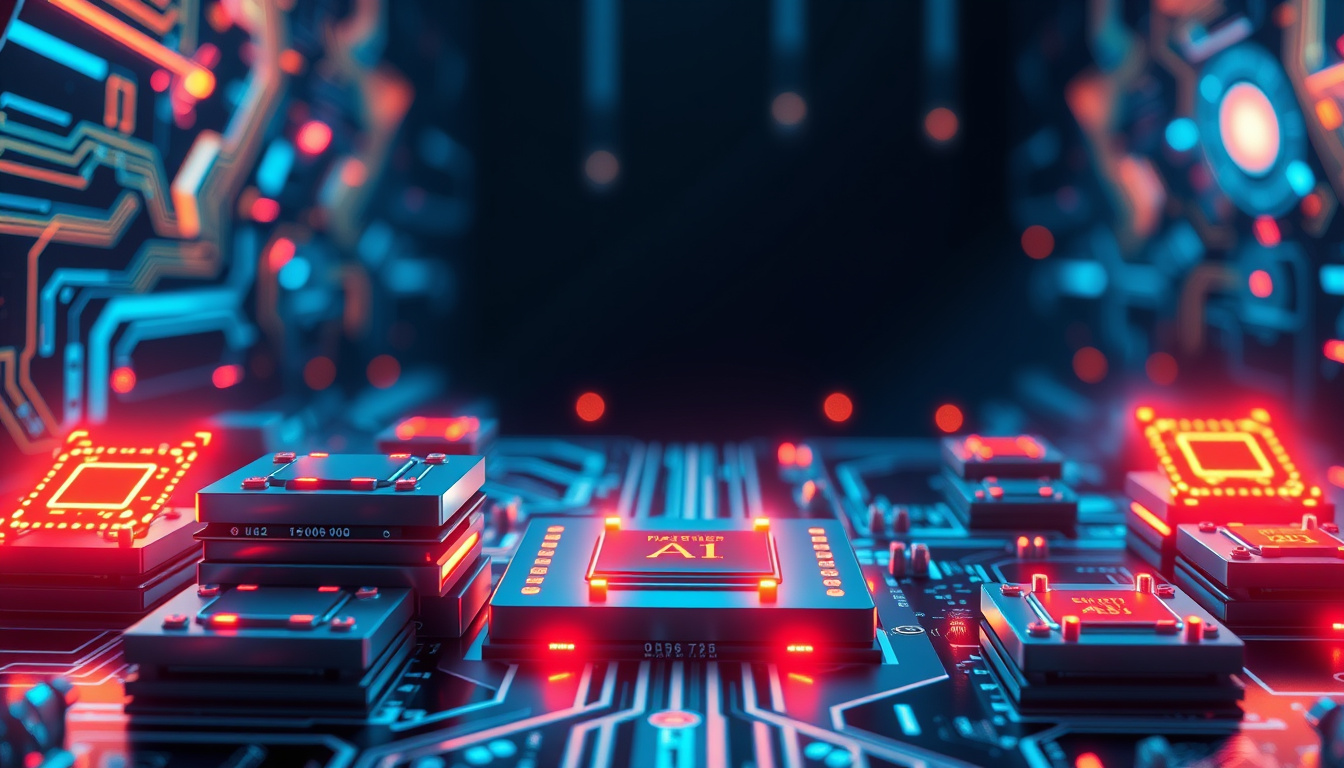
What Is AI Hardware?
AI hardware means special parts made for AI work. These parts work fast with large data. They differ from normal hardware. Normal hardware does many tasks one by one. AI parts run many steps together. They run tools for machine learning, deep learning, and neural networks.
CPUs work one step at a time. They help with small AI tasks. But AI needs parts that work side by side. AI hardware builds on chips, accelerators, memory units, and links. All are designed for AI.
Core Benefits Driving AI Hardware Development
-
Speed and Parallelism:
AI parts work in parallel. They run thousands or billions of steps together. This speed beats the one-by-one way of CPUs. GPUs, for example, run many math tasks at once. They help train deep learning fast. -
Purpose-Built Optimization:
Many AI chips have one main job. They work fast and with care. Some chips, like ASICs, fix their work to one AI task. FPGAs switch roles as AI needs change. They help develop and use new ideas. -
Energy Efficiency:
AI needs a lot of power. New parts now use low-precision math and smart fixes. They cut power use. Lower power drops cost and helps our planet. -
Enhanced Accuracy and Reliability:
Some AI, like medicine or driving, needs true facts. Better chips give clear results. They cut errors and help make decisions in real time.
Key Types of AI Hardware Components
Processors and Accelerators
-
Central Processing Units (CPUs):
CPUs work on many tasks. They support small models and prepare data. They guide work but run one step at a time. -
Graphics Processing Units (GPUs):
GPUs began with graphics. They now help run AI. They work with many numbers at once. They help train neural nets fast. -
Tensor Processing Units (TPUs):
TPUs are built for tensor math. Google and others use them. They work fast with large AI models. They aid in language and chat tasks. -
Neural Processing Units (NPUs):
NPUs boost neural work. They run activations and convolutions. They mirror brain work. They now work in small devices. -
Application-Specific Integrated Circuits (ASICs):
ASICs fix their job. They work to save power and boost speed. They cannot change tasks, yet they serve large-scale jobs well. -
Field-Programmable Gate Arrays (FPGAs):
FPGAs mix tweakability and speed. They update after setup. They serve AI tasks that need fast work.
Memory Technologies
Memory helps chips work fast with data:
-
Random Access Memory (RAM):
RAM saves data for quick steps. It forgets data when off. It holds a limited amount for large AI. -
Video RAM (VRAM):
VRAM works with GPUs. It speeds up many data steps. It helps with deep learning tasks. -
High Bandwidth Memory (HBM):
HBM runs very fast. It provides huge speeds for large AI parts. Data moves quickly without pause. -
Non-Volatile Memory (e.g., SSDs and HDDs):
This memory keeps data long. Its speed is low. It stores data, not for fast work.
AI Hardware in Real-World Applications
AI parts and software work hand in hand. Their link changes many fields:
-
Healthcare:
AI parts let machines read scans fast. They help in finding illness and guide care. -
Autonomous Vehicles:
AI chips live inside car sensors. They process road scenes fast. They help cars make quick choices for safety. -
Finance:
AI accelerators sift through many transactions in a flash. They help spot fraud and judge risks in real time. -
Consumer Devices:
Phones and tablets use AI chips. They help with face checks, voice help, and mixed reality. They deliver quick and smooth user work.
The Future of AI Hardware
New AI parts will break current limits. They will be bigger, faster, and smarter. Trends show:
-
Wafer-Scale Engines:
New engines put many cores on one chip. They boost the scale and speed for huge models. -
Edge AI Hardware:
Small AI chips will live in phones and IoT tools. They cut back on cloud needs and lift data privacy. -
Heterogeneous Computing:
Mixed chips will run many tasks by working together. CPUs, GPUs, TPUs, and NPUs will share the load. -
Energy-Efficient Architectures:
More green designs will push for more work per watt. New methods like analog and neuromorphic chips mimic the brain. -
Integration with Quantum Computing:
Quantum chips may join AI parts. They might tackle hard problems beyond normal chance.
Conclusion
AI hardware forms the base of new AI power. It sets new pace and scope for how tech grows. Chips, memory, and smart designs work to boost speed, truth, and power use. AI touches every tech field and our lives. New AI parts drive smart systems that learn, change, and work on a grand scale.
This close linking of words and ideas helps researchers, makers, and firms choose well and stay ahead. The clear and focused grammar makes each idea stand strong and easy to read.
Try this workflow today, Writer Link AI and Write Easy provide smart outputs with a natural voice. Get started with a free plan at