Artificial Intelligence (AI) changes many fields. It works in health, drives autonomous systems, and grows with each new model. AI models need more power as they get larger. Classic machines show their limits. Quantum computing now steps in. This field uses quantum mechanics to add strong computation. It helps solve problems that classic computers cannot. We show how quantum computing shapes AI. We note key breakthroughs, challenges, and tools that speed up this change.
Understanding Quantum Computing and Its Role in AI
Quantum computing uses superposition and entanglement. It links every qubit and number. Qubits can be 0 and 1 at once. This structure gives mass parallel work. Quantum computers process big data, optimize models, and simulate systems fast. They use quantum algorithms like Grover’s search and quantum annealing. These ideas speed up pattern search, optimization, and classification tasks.
Demonstrable Progress: Google’s Quantum AI
Google Quantum AI leads quantum work. They build error-corrected quantum chips. Their Willow quantum chip shows progress. The team published Quantum Echoes. This algorithm proves quantum computers can beat classic ones on hard tasks. Google also works on quantum error correction. They use Cirq software to test quantum ideas. Researchers connect with these tools to build practical AI systems.
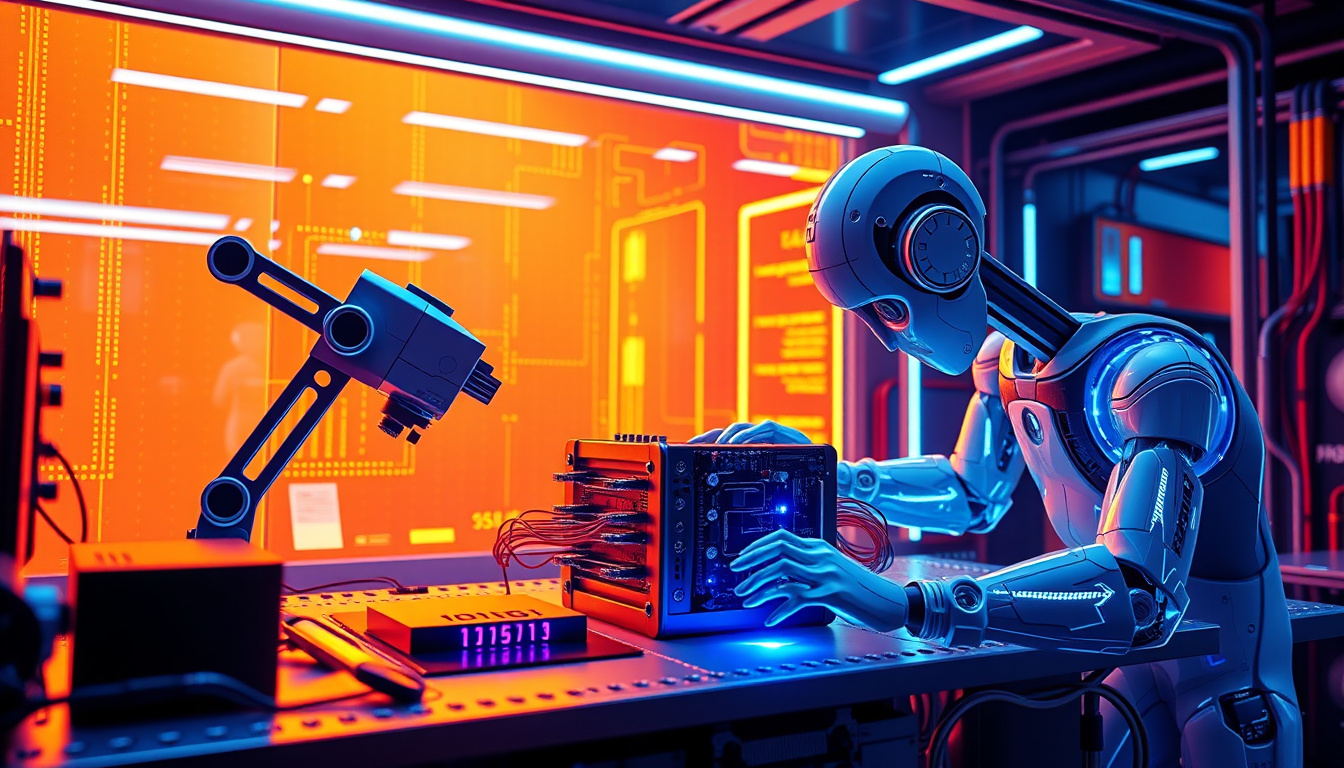
Overcoming Challenges Through AI-Driven Quantum Enhancements: NVIDIA’s Ising Models
Quantum computing faces challenges. Qubits get fragile. They need careful tuning and error fixes. NVIDIA leads with strong AI and hardware. They made Ising, the first open family of AI models for quantum work. Ising uses vision-language models to read quantum data. It cuts calibration time from days into hours. Ising then uses 3D convolutional networks. These networks clear error signals, working 2.5 times faster and three times better. Ising helps researchers build strong quantum systems. It turns fragile hardware into a firm quantum-AI hybrid.
The Growing Quantum AI Ecosystem and Future Outlook
A fast-growing ecosystem links quantum and AI. Universities and labs, like Harvard and Fermi, join this work. NVIDIA and Google lead many projects. Tools such as NVIDIA CUDA-Q enable hybrid quantum-classical work. They mix quantum speed with classic stability. The quantum market may grow past $11 billion by 2030. New error fixes and integration help train models faster, optimize systems better, and process data in real time. As tools and hardware improve, quantum-enhanced AI will meet tough puzzles. This change drives new steps in research, industry, and tech.
Conclusion
Quantum computing and AI mix to spark fresh advances. Google Quantum AI and NVIDIA’s Ising show the way. AI-driven tools fix errors and tune qubits, building strong systems. As quantum hardware matures and joins with classic computers, AI will solve hard tasks. This blend unlocks the future of intelligent computing.
Try this workflow today, Writer Link AI and Write Easy provide smart outputs with a natural voice. Get started with a free plan at